


AUTHOR

Mike Nash

Articles and GTM thought leadership.

Search icon
categories
Thank you! Your submission has been received!
Oops! Something went wrong while submitting the form.
Articles

March 12, 2025

Podcasts help 2025 GTM strategy by driving demand generation best practices to speed up sales and build trust with go-to-market engineering.

In 2025, the best brands aren’t just talking about their industry—they’re leading the conversation within it. Podcasts have become a critical tool in Go-to-Market (GTM) Strategy, providing a platform for thought leadership, customer engagement, and industry influence.

For brands looking to modernize their growth tactics and channels, a podcast is more than just content—it’s an owned media channel that supports demand generation, sales enablement, and market positioning. If you’re serious about growth, launching a podcast isn’t just an option—it’s a strategic advantage.

Podcasts Are a Brand Game-Changer

Few initiatives can compete with the authenticity and thought leadership that come from a well-executed podcast. As part of a strategic go-to-market framework, a brand podcast serves multiple purposes including:

  • Building brand authority – Position your company as the go-to expert in your industry.
  • Accelerating demand generation – Engage prospects earlier in the buying journey with valuable insights.
  • Fueling sales enablement – Equip sales teams with high-value content that addresses customer pain points.
  • Enhancing market education – Educate your audience on key trends and innovations, reinforcing your value proposition.

By integrating a podcast into your GTM playbook, you're not just producing content—you’re engineering a system that drives demand, nurtures leads, and strengthens your market position.

A Real-World, Mid-Market Example

To show how effective a podcast can be in a go-to-market strategy, we recently helped a warehouse automation systems integrator launch a branded podcast as part of their GTM efforts.

  • Within 30 days, they went from concept to publishing their first episode.
  • They now release two episodes per month, featuring industry partners and customers discussing innovations in automation.

Minimal Time Commitment, Maximum Impact

Mid-market businesses can’t afford to burden senior leaders with busywork and coordination that comes with managing, producing, and distributing a podcast, let alone the creation of all the derivative content that comes with a successful initiative.

If your podcast feels like yet another burden layered onto the leadership team, you’re doing it wrong.

The good news is the right partner (like Trelliswork) can ensure your brand gets all the benefits of a regular podcast without the operational burden, and at a fraction of the cost.

As an example, our team  handles production, distribution, content repurposing, and all content promotion - meaning the internal team spends just 60 minutes every two weeks showing up for a new recording.

This process ensures the podcast supports business growth without adding excessive workload and cost, making it a scalable and repeatable part of their overall GTM effort.

Podcasts Are Essential in 2025

Branded podcasts are no longer a niche experiment—they’re a proven GTM channel, and the numbers speak for themselves:

Podcasts Build Trust, Improve SEO, and Accelerate Sales Cycles

In an era of AI-generated content, human connection is critical. A podcast establishes trust by:

  • Featuring candid conversations with industry leaders, customers, and partners.
  • Providing actionable insights that buyers can use to solve real business challenges.
  • Keeping your brand top of mind throughout long sales cycles.
  • Establishing expertise, experience, authority, and trust (E.E.A.T) for SEO improvement

Studies show that 81% of podcast listeners trust the hosts and content they engage with, making this format one of the most effective trust-building tools in modern marketing.

As an additional piece of rich content for your brand, every episode gives you an opportunity to share the most recent industry insights in follow-up emails and lead nurture sequences you send as part of your business development.

A Podcast is a Core Asset in GTM Engineering

Consider you’re going after a strategic account. You hear from the chief revenue officer that they’re struggling to navigate all the different AI tools getting thrown at them, they’ve jumped at a few that promise ‘guaranteed leads in 3 days’, but the results are never what they expect and they’re lost.

Now, consider the simple feedback loop of incorporating a segment in your next episode related to mid-market founders struggling to navigate the barrage of AI tools that all promise incredible results, yet never deliver. You explain why they never deliver, what the offer looks like, and why under the surface there’s no shortcut to first establishing the brand fundamentals. That episode is now a slam dunk for a follow-up email to try and close the deal with the CRO, and every other deal like it down the road.

You’ve established authority and expertise with the CRO, and she is more likely to forward your mail and link to the podcast to their CEO who is struggling with the exact problem.

The CEO now feels like you’re talking directly to him. Like you’re reading his mind! To the CEO, you’re now exactly who they want to work with, you’re human, you have an opinion that resonates with what they’re currently experiencing.

You win.

Your Podcast Pays Content Dividends. 10x.

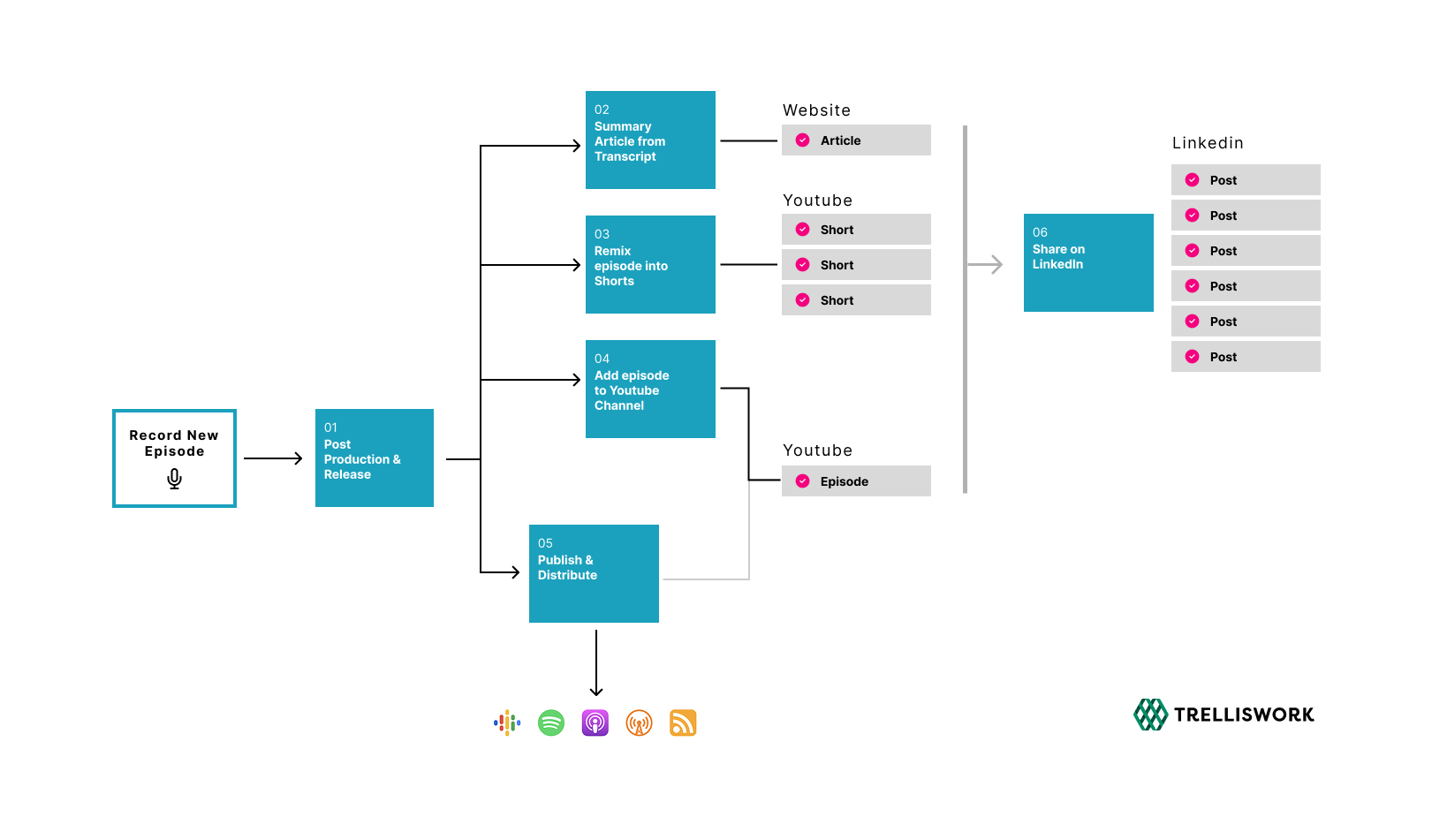
A single podcast episode fuels an entire GTM content engine. What you’re capturing is the purest form of thought leadership, recorded straight from your train of thought into a shareable video and audio recording. If you do it right and plan your content engine, each episode creates a goldmine of content for you to remix, repurpose, and reshare.

For a single podcast episode (w/ video recording), here’s an example of what your podcast content engine should produce:

  • 1 Podcast streaming episode (e.g. Spotify, Apple Podcast, etc)
  • 1 Youtube Video
  • 1 long-form article (from transcript)
  • 5 topical articles
  • 15 social posts
  • 5 Youtube Shorts
  • 10 more social posts

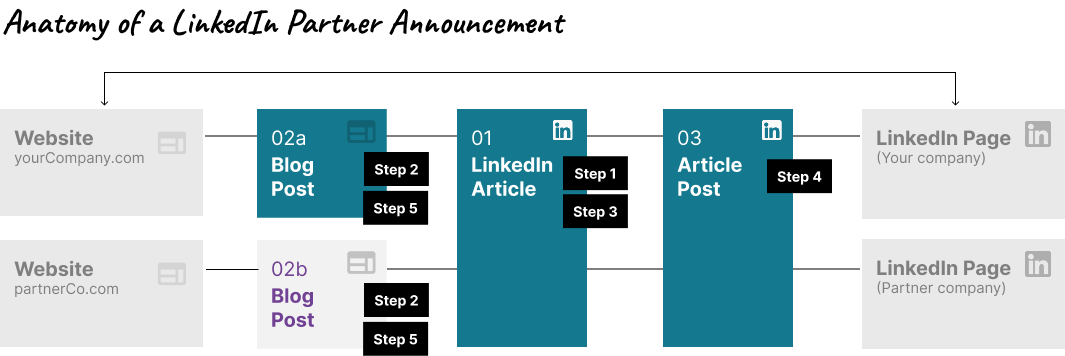
Here’s what that looks like in relation to the workflow required to connect the pieces from beginning to end.

A branded podcast isn’t just a marketing tool—it’s a structured GTM Engineering asset that scales across channels.

Podcasts Improve SEO and Brand Discoverability

Search engines are prioritizing rich media content, making podcasts a powerful asset for SEO and inbound marketing.

  • Transcripts improve search indexability, capturing high-intent queries.
  • Video podcasts gain visibility across key platforms (YouTube, LinkedIn, TikTok).
  • Search engines now index podcast content, boosting organic discovery.
  • Long-form discussions generate backlinks, increasing domain authority.

By integrating a podcast into your GTM strategy, you're not just producing content—you’re engineering an evergreen SEO and demand generation asset. Once you get into the rhythm, you’ll also find yourself spending less time thrashing on that latest blog post that’s taken you over two weeks to get right.

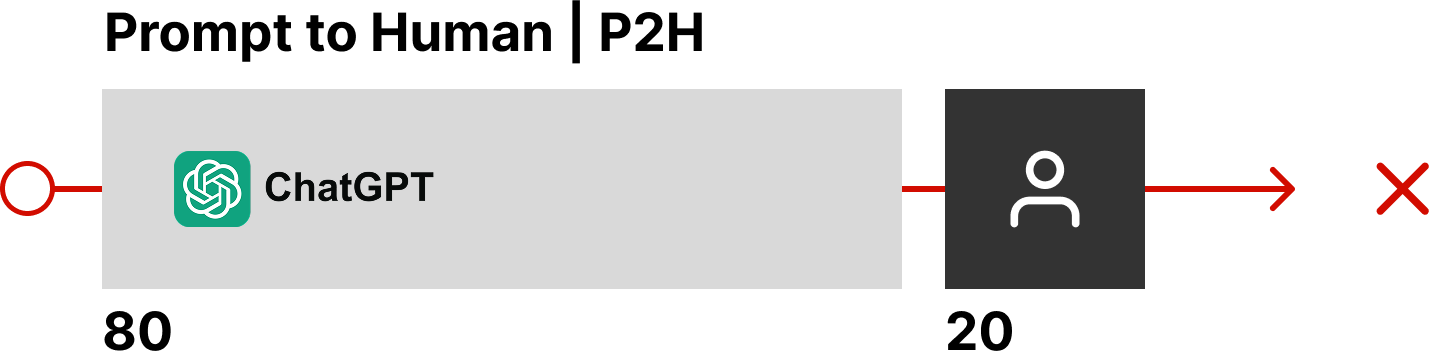
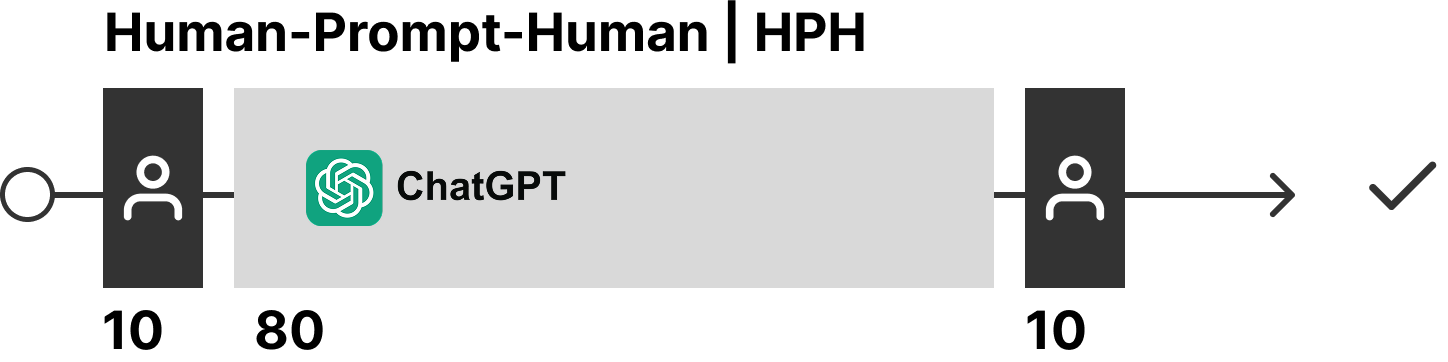
The secret sauce here is that a podcast lets you capture your thoughts in a more raw and authentic medium, with virtually zero latency. From here, AI is great at remixing your thoughts into structured, consistent narratives. Let chatGPT will get rid of the structural, grammatical busywork that actually prevents you from getting your content out into the world.

And that’s structural, grammatical business is the work we want AI to get rid of, so we can prioritize more thinking.

The Biggest Challenges: What Holds Brands Back?

Staying consistent with a podcast is harder than it sounds. Life, work, and shifting priorities can easily push recording sessions down the to-do list. But consistency is what separates brands that build loyal audiences from those that fizzle out. The key is to create the right conditions—batch recording episodes, setting a realistic release schedule, and making podcasting a core part of your marketing rhythm. Without a system in place, even the best intentions can fall apart.

Consistency is Key to Podcast Success

  • Build a backlog. Make sure you have at least two recorded episodes before launching. This ensures you never fall behind schedule if unexpected delays arise. Having a buffer allows you to maintain consistency, even when life or work interruptions occur. It also gives you time to refine your format, improve production quality, and gain confidence before releasing episodes to the public. A backlog eliminates last-minute scrambling and sets the foundation for a sustainable, long-term podcasting strategy.
    • We try to keep at least 2 episodes in the ‘ready to publish’ backlog. We’re not perfect, it doesn’t have to be, but so far this has worked for us!
  • Set a cadence. Weekly or biweekly releases work best for audience retention. Sticking with a set schedule builds listener habits and keeps engagement steady.
    • For example, we record our episodes every Friday at 2:00 PM, allowing us to reflect on the week’s discussions and industry trends as part of our content approach. Having a fixed time each week ensures that podcasting becomes part of our routine, rather than an afterthought.
  • Plan, but don’t over-plan. Avoid long production cycles—speed and authenticity matter more than perfection. You don’t need anything more than a few bullet points in notion ahead of your next recording, which serve as discussion prompts and starters, or incorporate strategic topics you know you want to hit on.
    • With the latest recording and distribution tools today a lot of the busywork goes away.

Stop Overthinking It

Authenticity wins in B2B storytelling. Be real.

I get it. There’s not enough time, everyone’s busy, what will you talk about, who’s going to listen, what’s the ROI, is it worth the effort?

It’s worth it, with the right approach. Just keep these tips in mind:

  • Be human. In a world flooded with AI-generated content, authenticity stands out. The real, unscripted voices of industry leaders cut through the noise, building trust and credibility. Podcasts let your team share raw, unfiltered insights, making your brand more relatable. The more human you are, the stronger your connection with your audience.
  • Don’t script it. Listeners can tell when something feels forced—don’t let your podcast sound like a corporate press release read by your lawyer. And it's not politics - there's no teleprompter!
  • Keep it real. Your audience wants authentic, casual conversations - these resonate more than polished, corporate messaging.

How to Start Your Podcast: GTM Essentials

Equipment (Keep It Simple)

  • Microphone: Shure MV7+ (great balance of quality & simplicity)
  • Microphone stand: Gator Boom Arm Desktop Stand
  • Headphones: Any reliable over-ear monitor headphones
  • Video Camera: We're rolling with front camera on our macbook pros for now. Gets the job done!

Recording Software (Our Picks)

  • Riverside.fm – Best for remote interviews and high-quality audio/video recording. Editing and distribution features are great. (We also tried zencastr, didn’t love it).
  • Descript – we’ve used this in the past, easy editing and transcription, better if you need to get into the weeds with transcripts and higher fidelity editing.

Make a Podcast Part of your GTM Playbook

Launching a podcast is one of the smartest GTM Engineering plays you can make in 2025. With 505 million global podcast listeners projected this year, brands that invest now will establish a foothold in a high-growth channel that supports demand generation, sales enablement, and brand authority.

The hardest part? Pressing record.

So, what’s stopping you?

Need a hand getting started, or want to offload the heavy lifting to our team?

Let’s talk

Read More
Articles

January 17, 2025

GTM engineering and RevOps help mid-market firms grow sales with data-driven marketing and automation using Trelliswork�s approach.

Rethinking Go-to-market Roles.

For years, your company's growth has been fueled by the founder's vision and personal network. But now, as a mid-market B2B in manufacturing, managed IT services, or professional services, you're likely facing a common challenge: growth stagnation. Referrals and repeat business are no longer enough to hit ambitious revenue targets. Customer expectations are evolving, competition is fiercer than ever, and the pressure to leverage the latest technologies – especially AI – is mounting. To break through this plateau, you need a structured, scalable, and modern approach to revenue operations: GTM Engineering.

We’ve been watching the conversation around GTM Engineering grow, and we particularly appreciate insights from industry leaders like Clay, who emphasize its natural synergy with Revenue Operations (RevOps). Think of RevOps as the essential foundation – providing the data infrastructure and processes you need. GTM Engineering, then, is the architect and builder, applying cutting-edge tooling, AI-driven automation, and data-backed experimentation on top of that foundation. Together, they empower businesses like yours to rapidly iterate and refine your go-to-market strategies with unprecedented speed and precision.

Understanding GTM Engineering: Beyond Traditional Sales & Marketing Operations

GTM Engineering is more than just a new job title. It's a an appreciation of what modern go-to-market performance demands to be effective in today's AI-enabled, technically inclined, and fragmented world of growth marketing. Unlike traditional marketing and sales operations, which often rely on manual processes and intuition, GTM Engineering is built on a foundation of data and experimentation. It's about enhancing customer acquisition, boosting sales efficiency, and accelerating revenue growth through intelligent automation and data-driven insights. It requires technical abilities from API integrations, to low-code scripting, no-code workflows, and increasingly complicated orchestration.

Not Your Typical Marketing Manager

Today's technology-forward marketing specialist needs to be grounded in customer empathy and growth strategy, yet fluent in systems thinking.

Technology has been making its way into the sales and marketing world for decades, but until recently, the demands of the core function of marketing have largely remained unchanged. This is changing with the degree of technical integration, automation, and AI-enablement that's taking the marketing and sales operations landscape by storm. It's no longer about drafting social media posts, email newsletters, and campaign strategy. It's increasingly about doing all of these things and more, automated, with a smaller, scrappier, tech-enabled team. For example, a typical set of weekly tasks for marketing now include:

  • Workflow Automation & Scripting: Streamlining repetitive tasks across your sales and marketing workflows. Imagine automating quote follow-ups for your manufacturing sales team or personalizing onboarding sequences for your managed IT service clients – freeing up valuable time for higher-value interactions.
  • AI & Data Enrichment: Enhancing customer understanding and lead scoring with the power of AI. This means moving beyond basic demographic scoring to AI-powered predictive lead scoring, identifying your hottest prospects with far greater accuracy.
  • Scalability & Experimentation: Rapidly testing new sales and marketing tactics, optimizing performance based on real-time data, and quickly iterating to find what truly moves the needle for your specific industry and customer base.

This isn't to say that marketing or sales are dead of course. Rather, they're both changing dramatically, and businesses need to recognize the change that's needed in their existing workforce to navigate and embrace this change to ensure they have the organization they need for future, competitive growth.

What about RevOps?

Peanut butter and jelly. GTM Engineers and Revenue Operations specialists are the superhero duos that will define the modern growth marketing organization. Let's look at Revenue Operations (RevOps) in more detail before connecting the dots. Simply put, RevOps provides the critical infrastructure for an efficient go-to-market motion. If you're already using HubSpot (or a similar CRM), you're likely familiar with the promise of RevOps. It's about aligning sales, marketing, and customer success by establishing:

  • A Unified Data Infrastructure (Often Built on HubSpot): Ensuring all your revenue teams are working from the same single source of truth.
  • Structured Pipeline, Forecasting, & Reporting: Providing clear visibility into your sales pipeline and reliable revenue projections.
  • Operational Consistency: Establishing repeatable processes that support sustained, long-term revenue growth.
  • Seamless Cross-Functional Collaboration: Breaking down silos and fostering alignment between sales, marketing, and customer success teams.
  • Continuous Performance Tracking & Optimization: Utilizing robust analytics and KPIs to monitor and improve performance.

While RevOps enhances operational efficiency, it often falls short in driving innovation and unlocking truly scalable growth. It won’t solve founder-led growth challenges or guide AI adoption on its own. This is where GTM Engineering becomes essential.

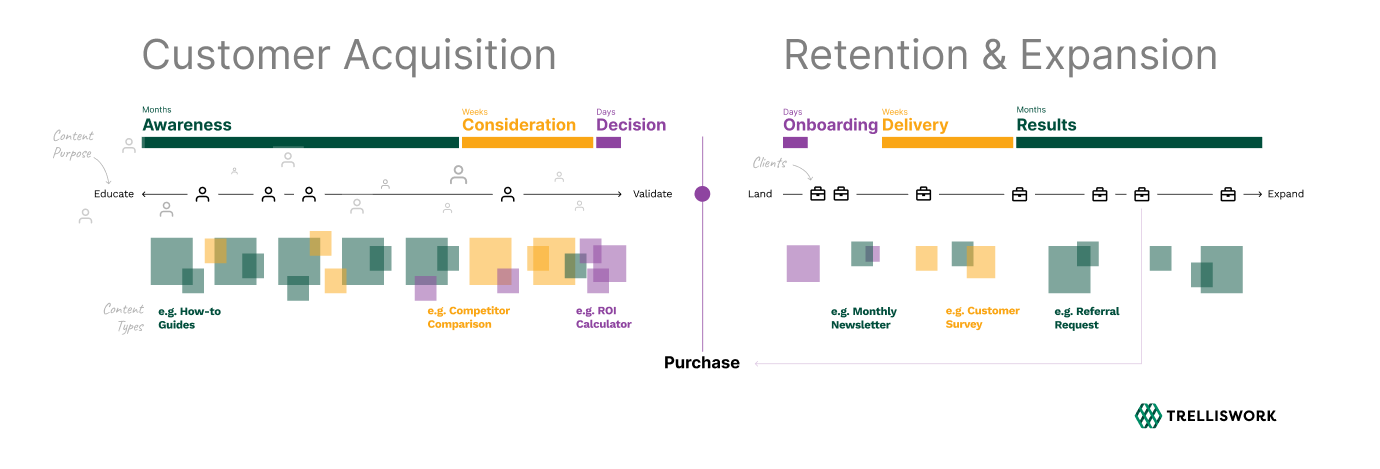
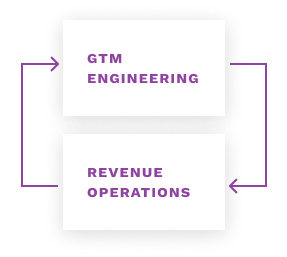
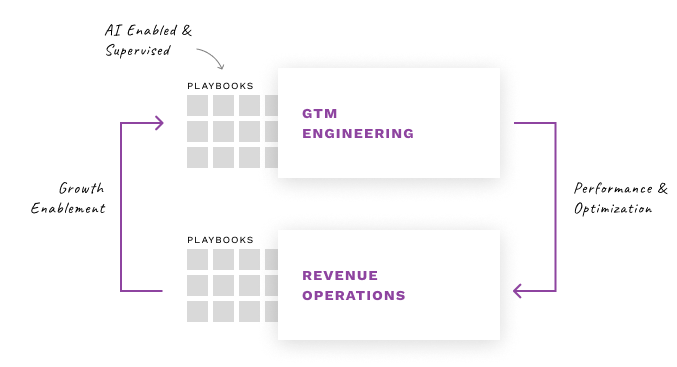
At Trelliswork, we take an intentional approach to building a revenue engine—one that embeds repeatable processes and workflows into the fabric of your operations. This is where GTM Playbooks live. Our RevOps foundation is designed to make it easier for teams to manage and execute these playbooks, ensuring growth is structured and scalable. Through our managed service, we provide the guardrails your business needs to accelerate growth—without getting lost in orchestration. Ultimately, there's a system we're putting in place, so you don't have to. It starts to look like this:

RevOps & GTM Engineering: Connecting the Dots

GTM Engineering builds directly upon your RevOps foundation, injecting new AI-powered tools, intelligent automation, and data-driven experimentation strategies to ignite revenue growth. More than anything, these two functions perfectly complement one another in a modern growth organization.

At scale, this coordination between function is what makes it possible to move beyond coordinating, strategizing, and simple talking about growing the business, and actually putting plans into motion that build on one another, not compete for resources and data in organizational siloes. This is how companies:

  • Move Beyond Founder-Led Leads with AI-Powered Lead Qualification: Stop relying solely on personal networks and referrals. GTM Engineering leverages AI to dynamically score and prioritize leads based on a much wider range of data points, identifying high-potential prospects you might otherwise miss. Imagine your sales team focusing only on the warmest, most qualified leads, dramatically improving efficiency and conversion rates.
  • Scale Personalization with Dynamic Sales Engagement Automation: Move beyond generic outreach. Implement AI-driven automated outreach and follow-ups triggered by individual prospect behavior. For example, automatically nurturing leads who engage with specific content on your website or downloading key resources. This level of personalization at scale was simply impossible before AI-powered GTM Engineering.
  • Agile Growth with Real-Time GTM Adjustments: Static strategies are a recipe for stagnation. GTM Engineering enables agile adjustments to campaigns and sales strategies based on live performance data. If a particular marketing campaign for your managed IT services isn't performing, AI-driven insights can quickly pinpoint the issue and recommend real-time adjustments, maximizing your ROI.
  • Optimize Your Underutilized HubSpot (or CRM): Stop letting your CRM become shelf-ware. GTM Engineering provides the strategies and AI-powered automations to finally unlock the full potential of your HubSpot investment, transforming it into a powerful engine for growth and sales & marketing alignment.

By integrating GTM Engineering into your RevOps framework, your mid-market B2B company ensures you're not just operating efficiently, but also continuously learning, adapting, and evolving your revenue generation approach to stay ahead of the curve – and finally break free from founder-led growth limitations.

The Business Case for GTM Engineering in Mid-Market

For companies like yours, GTM Engineering isn't just a "nice-to-have" – it's a game-changer and a competitive imperative. You likely lack the vast internal resources of enterprise giants, making agile, scalable go-to-market strategies absolutely essential for sustained success. The key benefits are clear:

  • Accelerated, Scalable Growth: Faster iteration cycles mean quicker identification of what resonates with your target market and what doesn’t.
  • Dramatically Improved Sales & Marketing Efficiency: AI-powered automation slashes manual effort, freeing up your sales and marketing teams to focus on high-value activities like building relationships and closing complex deals. Managed IT service providers are leveraging GTM Engineering to reduce sales cycle times by as much as 20%, allowing them to onboard new clients faster and drive revenue growth.
  • Gain a Critical Competitive Edge: In today’s dynamic market, businesses that continuously experiment and refine their GTM motions through data and AI will consistently outperform those clinging to outdated, static strategies.
  • Stronger Sales & Marketing Alignment: GTM Engineering acts as the bridge, ensuring sales, marketing, and RevOps teams are unified around a data-driven, AI-powered approach to revenue generation, eliminating silos and maximizing impact.

Implementing GTM Engineering: A Hands-On Approach

At Trelliswork, we understand that adopting GTM Engineering can feel daunting, especially when you're already stretched thin. That’s why we offer a managed service solution specifically designed for mid-market B2B companies like yours. We provide a structured, phased approach to adopting GTM Engineering without the massive investment and risk of building an in-house team from scratch. Our approach helps you:

  • Implement Tailored GTM Engineering Strategies: We deploy proven, AI-powered playbooks specifically designed for your industry and business goals. This includes implementing AI-driven lead scoring playbooks, dynamic sales engagement sequences, and real-time campaign optimization dashboards.
  • Optimize Your Core Revenue Processes: We seamlessly align GTM Engineering with your existing RevOps framework (often built on HubSpot) to maximize efficiency and data utilization.
  • Transition to Sustainable Self-Sufficiency: Our goal isn't just short-term gains. Over time, we guide your internal teams in taking ownership of these GTM Engineering functions, empowering you to operate with a stronger, more adaptive GTM framework long-term.

This phased, hands-on approach ensures your company can adopt GTM Engineering with minimal disruption and risk, while rapidly unlocking significant revenue potential and building a future-proof growth engine. And remember, the whole point is to build repeatable growth systems, which keeps your teams out of the never-ending busywork that consumes traditional growth teams. Your go-to-market needs outputs to drive results, not death by coordination and strategy meetings.

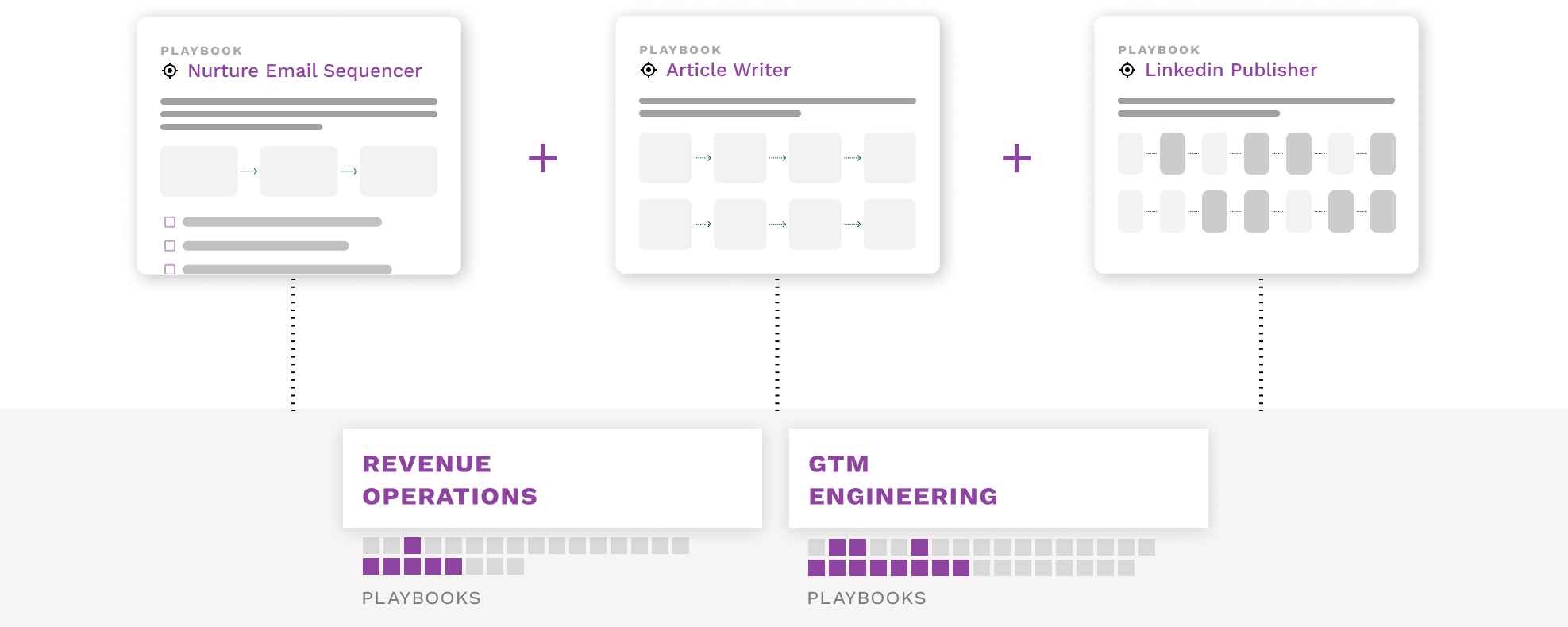
The magic happens when you intentionally engineer the conditions for an AI-enabled growth strategy. Here's a more tactical example of what that starts to look like at scale. RevOps and GTM Engineering functioning in concert to enable the growth functions you need, powered by a catalog of playbooks under the surface to make it all seem easy.

Ready to Re-Engineer Your Revenue Growth?

The convergence of GTM Engineering and RevOps isn't just a trend – it's the future of sustainable revenue growth for mid-market B2B companies. As you navigate an increasingly complex and AI-driven go-to-market landscape, adopting a structured yet agile and intelligent approach is no longer optional, it's essential for survival and success.

Is your company stuck in founder-led growth and unsure how to leverage AI for revenue acceleration? Let Trelliswork show you the practical, AI-powered path to scalable, sustainable revenue growth. Get in touch for a free GTM assessment today to get started.

Read More
Articles

December 4, 2024

Improve go-to-market strategy with Trelliswork�s focus and discipline to connect sales and marketing for better B2B business growth.

Over the years, we’ve seen the same two challenges hold companies back when it comes to achieving effective Go-to-Market execution: lack of focus on an ideal customer and lack of discipline in executing tactics consistently over time. These two factors are often the make-or-break difference between companies that scale successfully and those that lose momentum.

Challenge 1: Focus

A lack of focus typically shows up as chasing too many opportunities. It looks like spreading yourself across too many distribution channels at the same time. It looks like pivoting your ideal customer profile week after week or failing to build alignment around who you serve best. And it looks like inconsistent brand messaging that confuses the market and weakens your position.

Most companies are in a perpetual struggle with their go-to-market focus. For founders this is especially true, because the initial instinct is to cast as wide a net as possible. Why limit the companies who might need your product service? This feels like arbitrarily closing the door on potential customers. But it's a trap.

The truth is, you don't actually WANT the wide net to work. You want your first customers to be as similar as possible. Because similarity scales.

Custom solutions, saying yes to every new customer request, chasing any flavor of revenue you can find - for a services company this is the path to mediocre margins, at best. For product companies, this is the path to a frankenstein suite of solutions. And it's easy to fall in these traps when there are no guardrails, no focus, no instructions for who to say "no" to.

Challenge 2: Discipline

Discipline, meanwhile, is the engine that drives progress. The companies that win aren’t just the ones with the flashiest launches or cleverest campaigns—they’re the ones who stick with a focused plan, executing relentlessly and refining over time. They build processes, they align their teams, and they optimize the entire machine to deliver results, week over week, quarter after quarter.

Showing up every day and delivering on commitments is what sets great companies apart from the rest. Imbue this in your culture and ethos as a business and as a leader and great things are possible. Progress takes time.

The key is making discipline easy to execute. It takes prioritization, and for repeatable tasks its critical to not have to reinvent the wheel each time. Documenting process, capturing steps and information, and assembling the playbooks that drive you business forward are essential to creating the conditions for discipline to take root.

Gain Focus. Build Discipline.

To turn the corner and get growth on track, think of the playing field through the lens of GTM engineering. GTM engineering is about more than just planning—it’s about building and operationalizing a Go-to-Market motion that works. And once you find a tactic that works, that’s when you want the discipline to drive repeated execution to scale results. The trouble is, with so many spinning plates in the air, it’s harder than people to keep your eye on the execution button.

This is where we help companies embrace modern AI techniques to streamline operations, reduce inefficiencies, and deliver impactful outcomes faster. We work with teams to program the repeatable playbooks and GTM tactics into their daily operating rhythms, and that means execution that scales to meet your growth targets without having to always scale your resources.

RevOps: the Backbone of GTM Success

Revops is more than just a buzzword in 2025. Revenue Operations is the essential foundation that enables focused and disciplined Go-to-Market execution. RevOps isn’t just about aligning systems and cleaning up data—it’s about creating a unified engine that ties strategy to outcomes.

RevOps ensures every team—sales, marketing, customer success—moves in lockstep, with clear visibility into what’s working and what’s not. It helps companies avoid the chaos of shifting priorities, wasted resources, and fragmented messaging. Instead, it enables clarity, alignment, and accountability across the organization.

The point is, regardless of how automated your GTM engineering playbooks are, they need a foundation to actually run on, to pull data from, to nurture deals in, and provide the clarity and visibility your teams need. Hubspot is the go-to platform us today, and it’s ground-zero for so much of the heavy lifting that teams need to be successful in today’s modern GTM landscape.

A Smarter Path to Growth

In today’s environment, companies don’t have the luxury of inefficiency. CEOs, private equity firms, and business leaders are under pressure to do more with less, and the stakes have never been higher. Whether you’re looking to scale efficiently, prepare for an acquisition, or reallocate operating costs, focus and disciplined execution are the cornerstones of success.

The choice is yours.

Need help redesigning your GTM system? Let's talk!

Read More
Guides

November 12, 2024

Learn B2B revenue operations to improve data hygiene in RevOps and sales for integrators in automation and logistics with AI-driven tips.

In today’s fast‐paced, technology-driven business landscape, B2B companies must break down internal silos, align their revenue teams, and harness data and AI to drive growth. Revenue Operations—or RevOps—is the strategy that unifies sales, marketing, and customer success so every part of the revenue engine is coordinated and optimized. In this comprehensive guide, we’ll explore how RevOps works across three key industries: professional services, warehouse automation, and supply chain logistics. We focus specifically on two critical pillars—data quality and go-to-market (GTM) execution—while addressing the challenges of integrating modern technology and adopting artificial intelligence (AI).

What Is Revenue Operations and Why It Matters

Revenue Operations is more than just a buzzword; it’s a framework that centralizes and streamlines all revenue-generating activities. Traditional companies often see separate sales, marketing, and customer success teams working in isolation. This fragmentation creates gaps in the customer journey, misaligned processes, and unreliable forecasting.

RevOps Unifies Your Revenue Engine

Think of RevOps as the operational fabric underlaying your core business functions from sales, to marketing, to customer operations. When your business is able to connect the dots across these traditional silos, the benefits are easy to see:

  • Alignment: By establishing a single source of truth for customer data and a common strategy, RevOps brings together all teams responsible for generating revenue.
  • Data-Driven Decisions: RevOps relies on high-quality, integrated data to help leaders forecast revenue accurately, identify growth opportunities, and adjust strategies in real time.
  • Operational Efficiency: With streamlined processes, teams can eliminate redundant work and focus on high-impact activities—whether that’s targeting a new market segment or perfecting the handoff from sales to service.

In a world with complex technology stacks and the rapid adoption of AI tools, RevOps is the cornerstone of predictable and scalable growth. Let’s explore how these principles play out in three different industries.

Industry-Specific RevOps Challenges

While the core principles of RevOps remain constant, each industry faces unique challenges and opportunities. Below, we break down the nuances for professional services, warehouse automation, and supply chain logistics.

Professional Services

Professional services firms—such as consulting agencies, IT service providers, and law firms—deliver expertise, advice, and project-based work. Their revenue typically comes from billable hours, project fees, or retainer models. These companies often build client relationships on trust and personal interaction, meaning that much of the customer data may reside in individual notebooks or isolated systems.

  • Fragmented Client Data: Without a unified view, key insights can be lost. Different teams might track client interactions in separate systems, making it hard to identify cross-sell opportunities or ensure consistent service.
  • Complex Sales Cycles: Because sales are highly consultative, leads often evolve from small advisory projects into larger engagements over time.
  • Manual Processes: Relying on individual recollection and personal note-taking increases the risk of data decay and missed revenue opportunities.

Warehouse Automation

Warehouse automation companies provide robotic systems, automated handling equipment, and related software solutions to distribution centers and factories. Sales here are typically high-value, complex deals that involve a combination of hardware, software, and professional services. Because these deals are often large and lengthy, accurate forecasting and detailed data tracking become critical.

  • Legacy Systems and Manual Processes: Many companies in this sector have traditionally relied on relationship-based selling without a standardized CRM. Data often ends up scattered across spreadsheets and personal notes.
  • Complex Quoting and Configuration: Each deal may require unique system configurations. Inaccurate quoting can lead to costly errors.
  • Long Sales Cycles: With sales cycles lasting six to 18 months, multiple team members touch an opportunity. This increases the risk of data entry errors or miscommunication if systems are not integrated.

Supply Chain Logistics

In the supply chain logistics industry, companies manage the movement of goods through transportation, warehousing, and distribution. This sector often deals with both long-term contracts and rapid, transactional business. The complexity of coordinating fleets, warehouses, and customer expectations creates unique challenges in RevOps.Challenges in Supply Chain Logistics

  • Fragmented Data Across Systems: Logistics firms frequently use separate systems for shipment tracking, billing, and sales. This can lead to discrepancies and data silos.
  • Alignment Between Sales and Operations: Sales may promise service levels that operations cannot meet if there isn’t a clear, integrated process.
  • Rapid Market Changes: Economic shifts, regulatory changes, or unexpected events (like a global pandemic) can quickly alter demand patterns. Real-time data and agile processes are critical to responding effectively.

Industry-Agnostic Best Practices

Regardless of industry vertical, clean CRM data, alignment between functional organizations, and centralized customer data are all common fundamentals of a sound revenue operations strategy. Here are a few more to keep in mind:

  1. Unify Sales and Operational Data: Integrate your CRM with your Transportation Management System (TMS) or Warehouse Management System (WMS) to create a complete view of the customer journey.
  2. Enhance Customer Experience: Implement tools that offer real-time tracking and automated customer notifications. A unified system prevents issues like double-contacting a client or providing outdated information.
  3. Optimize GTM Execution with Territory and Segmentation: Use data to segment customers and allocate sales resources efficiently. Establish clear rules of engagement so that leads are routed to the correct team and no opportunity falls through the cracks.
  4. Centralize Client Data: Implement a robust CRM that integrates with project management and finance systems. A unified view ensures that every team member—from the initial salesperson to the delivery team—has access to the full customer history.
  5. Align Sales, Marketing, and Delivery: Define clear handoffs between teams. When a marketing campaign generates a lead, it should be routed efficiently to the correct practice leader. Similarly, once a project is sold, customer success and delivery teams must be notified promptly.
  6. Leverage AI for Enhanced Client Management: Use AI tools to analyze past proposals, predict upsell opportunities, or even draft parts of new proposals. For instance, relationship intelligence platforms can monitor communication patterns and alert teams when a dormant client might be ripe for re-engagement.

Data Quality: The Foundation of Effective RevOps

No matter the industry, the quality of your data is the bedrock upon which effective RevOps is built. Without accurate, integrated, and up-to-date data, your forecasts, customer insights, and overall GTM execution will suffer.Why Data Quality MattersHigh-quality data is essential for:

  • Accurate Forecasting:Forecasts based on flawed data lead to missed revenue targets and poor resource allocation.
  • Improved Sales Efficiency:Clean data means your sales team spends less time chasing outdated contacts and more time closing deals.
  • Enhanced Customer Experience:Consistent data across systems ensures that every interaction with your company is informed and relevant.

For example, if 20% of contacts in your CRM have incorrect phone numbers or outdated information, your sales reps waste precious hours reaching dead ends. Inaccurate data also skews analytics, leading to poor decision-making at the leadership level.

Overcoming Data Challenges

Many organizations struggle with data silos—when different teams maintain separate records. In professional services, valuable client information might be trapped in personal notes; in warehouse automation, multiple people might enter data about the same deal; and in logistics, data from various systems may never “talk” to one another.

Best Practices to Improve Data Quality

  1. Create a Single Source of Truth: Establish one primary system (typically your CRM) as the definitive repository for all customer and opportunity data. Integrate other tools (marketing automation, support, etc.) so that data flows seamlessly.
  2. Implement Data Governance Rules: Standardize data entry formats with picklists and validation rules. Use automation to prevent duplicate entries and to normalize data (e.g., ensuring “ACME Corp” isn’t recorded in multiple ways).
  3. Regular Data Cleansing: Schedule quarterly reviews to clean and update data. AI-powered tools can automatically deduplicate records, flag outdated information, and even enrich your data by connecting with third-party sources like ZoomInfo or Dun & Bradstreet.
  4. Cross-Functional Data Stewardship: Make every team responsible for the quality of the data they enter. Designate “data champions” in each department who regularly audit records and provide feedback.
  5. Leverage AI for Ongoing Maintenance: Use AI-driven anomaly detection to catch errors in real time. For instance, an AI tool might alert your team if a critical field is left blank or if data entries deviate significantly from expected patterns.

The Impact of Good Data

When your data is clean, you gain clear insights into your sales pipeline, customer behavior, and overall performance. For example, companies that have integrated their databases have seen conversion rates improve by over 12%—a direct result of more targeted and informed engagement with prospects. In short, high-quality data equals clear insights, better decision-making, and ultimately, more revenue.

Go-to-Market Execution: Turning Strategy into Revenue

A well-aligned go-to-market (GTM) strategy is where the planning of RevOps meets real-world execution. Whether you’re targeting high-touch, consultative engagements in professional services or large, complex deals in warehouse automation, or even balancing long-term contracts with rapid transactions in logistics, the principles remain similar: every part of the revenue process must work in unison.

The Five Stages of GTM Execution

  1. Lead Generation & Marketing: Marketing attracts prospects through digital campaigns, events, and content. The key is to define what a qualified lead is—ensuring that only the best prospects move into the sales funnel. AI tools can optimize targeting and personalize outreach based on data insights.
  2. Sales Qualification & Process: Sales teams then qualify leads, ensuring that prospects are a good fit. This stage involves a structured process with defined stages such as “Discovery,” “Proposal,” and “Negotiation.” RevOps helps by establishing clear handoffs and using data to monitor progress.
  3. Deal Management & Close: As opportunities advance, RevOps monitors the pipeline, ensuring that no deal is left to stagnate. Coordinated pricing approvals, proposal generation, and performance reviews ensure that the close phase is efficient. AI-driven insights might flag deals at risk, prompting proactive action.
  4. Handoff to Customer Success: Once a deal is won, a seamless handoff ensures that the customer’s experience continues to be positive. RevOps plays a role in scheduling onboarding, aligning support resources, and tracking performance metrics.
  5. Retention & Expansion: Finally, ongoing customer success efforts lead to renewals and upsell opportunities. With a unified view of customer interactions, teams can proactively manage customer health, leveraging AI to identify when an account is ready for an upsell.

GTM Execution by Industry

  • For Professional Services: GTM execution is relationship-driven. Marketing may run thought leadership campaigns or host executive roundtables to engage decision makers, while sales use consultative approaches to build trust over time. The key here is ensuring that multiple service lines are coordinated, so a client receives a “one firm” experience rather than fragmented pitches.
  • For Warehouse Automation: GTM execution is often account-based, targeting a smaller set of high-value prospects with customized solutions. Sales enablement is critical—providing technical collateral, ROI calculators, and case studies to back up proposals. A “deal desk” function can help coordinate complex deals, ensuring that every detail from technical specifications to pricing is aligned.
  • For Supply Chain Logistics: GTM execution must balance between long-term enterprise contracts and rapid, transactional sales. Integrating operational data (like on-time delivery rates) with sales information is key to ensuring promises made during the sales process can be met. Segmentation by region, customer size, or service type often guides how teams are organized and how leads are prioritized.

The Role of AI in GTM Execution

AI is transforming how companies engage with prospects and manage deals. While by no means exhaustive, here are just a few ways AI is already moving the needle in 2025:

  • Lead Scoring and Segmentation:AI models analyze historical data to predict which leads are most likely to convert, ensuring that sales teams focus on high-potential opportunities.
  • Personalized Outreach:AI can tailor emails, website experiences, and other content based on a prospect’s industry or previous behavior.
  • Deal Risk Alerts:AI can flag opportunities that are at risk—allowing sales leaders to step in and adjust tactics.
  • Next-Best-Action Recommendations:For customer success, AI might suggest when to reach out to a client or which upsell opportunity to pursue based on usage data.

And that's just a start. It seems there's a new tool on the block every week at this point, and the rest of 2025 should have more on the way.

Technology & AI: The Backbone of Modern RevOps

As technology and AI become ever more integrated into business operations, they are revolutionizing RevOps across all industries. A carefully chosen tech stack not only supports daily operations but also drives strategic insights and revenue growth.Building Your RevOps Tech StackA modern RevOps tech stack typically includes:

  • CRM Systems:Centralizing customer and sales data, CRMs like Salesforce or HubSpot serve as the heart of the RevOps engine.
  • Marketing Automation Platforms:Tools such as Marketo or Pardot capture and nurture leads while integrating data back into the CRM.
  • Sales Enablement Tools:Platforms like Salesloft and Gong help optimize outreach and provide actionable insights from customer interactions.
  • CPQ and Billing Tools:For industries like warehouse automation, CPQ systems ensure accurate quoting and pricing, reducing costly errors.
  • Analytics and BI:Tools like Tableau or Power BI consolidate data from multiple systems, offering dashboards and reports that drive decision-making.
  • Customer Success Platforms:Software such as Gainsight tracks customer health and engagement post-sale.
  • Data Management and Enrichment Tools:Integrations with providers like ZoomInfo help maintain high-quality data.

Leveraging AI in RevOps

While AI has changed the GTM execution game, foundational revenue operations has just as much to gain. For Trelliswork, the area that's most exciting for us is when we apply the concept of AI-enabled workflows and agents to traditional revops playbooks. More on this later, but for now, here are a few areas where AI is moving the needle already:

  1. Analytics and Forecasting: AI-powered tools, such as Clari, can analyze historical data to predict revenue more accurately, identify pipeline risks, and suggest adjustments.
  2. Automation of Routine Tasks: From data cleansing to scheduling meetings, AI can handle repetitive work, freeing up teams for higher-value tasks.
  3. Personalization at Scale: AI-driven personalization ensures that marketing messages and sales outreach are tailored to the prospect’s needs and behavior.
  4. Training and Coaching: Tools that analyze sales calls and provide feedback help continuously improve team performance.

Future Trends and Recommendations

As technology evolves, the choice is yours for how your business adapts and competes in an ever-evolving world of AI-enabled tools and processes. To stay one step ahead of the competition, keep these strategies in mind:

  • Embrace Unified Platforms: Look for solutions that combine CRM, marketing, sales, and analytics features into a single, integrated platform.
  • Pilot AI Initiatives: Rather than overhauling everything at once, start with one high-impact area—like AI-powered forecasting—and expand from there.
  • Focus on Data Readiness: Good AI starts with good data. Invest in cleaning and unifying your data before integrating advanced tools.
  • Train Your Teams: Ensure that everyone understands the new tools. Provide regular training and support to maximize adoption.
  • Stay Agile: The tech landscape is evolving rapidly. Maintain an agile mindset and continuously reassess your tools and processes.

The complexity of today’s B2B landscape—with its ever-expanding technology stacks and rapid adoption of AI—demands a new approach to revenue generation. Revenue Operations provides the framework that aligns sales, marketing, and customer success into one powerful engine. By focusing on two critical pillars—data quality and go-to-market execution—businesses in professional services, warehouse automation, and supply chain logistics can overcome challenges and unlock significant revenue growth.Key Takeaways

  • Unified Data is Foundational: Clean, integrated data underpins everything from accurate forecasting to effective GTM strategies. Poor data quality costs companies billions, while robust data governance leads to measurable improvements in conversion rates and customer satisfaction.
  • Tailored GTM Execution Drives Results: Whether you are engaging in high-touch consultative sales or balancing enterprise contracts with rapid transactions, aligning your sales, marketing, and operations teams through RevOps ensures that every part of the customer journey is optimized.
  • Embrace Technology and AI: A well-integrated tech stack—not just a collection of tools—supports the entire revenue process. AI is already transforming forecasting, personalization, and operational efficiency. Early adopters will see a significant competitive advantage.
  • Agility is Key: In a fast-changing market, the ability to pivot quickly based on real-time data is invaluable. RevOps provides the structure and insights to make swift, informed decisions that keep your company ahead of the competition.

By building a strong RevOps foundation—centering on accurate data and seamless go-to-market execution—your organization can navigate today’s technological complexity and position itself for sustained growth. Embrace these strategies and watch as your revenue operations transform into a finely tuned engine for success.

Ready to transform your revenue operations?

Implementing a robust RevOps strategy isn’t just about technology—it’s about aligning people, processes, and data. If your organization operates in professional services, warehouse automation, or supply chain logistics, start by auditing your data, unifying your systems, and empowering your teams with the latest AI tools. With a comprehensive RevOps playbook in place, you’ll turn complexity into opportunity and drive predictable, scalable revenue growth.

Read More
News

June 14, 2024

Trelliswork grew from fixing revenue operations to go-to-market engineering using AI and simpler CRM to help B2B companies sell better.

When we launched Trelliswork in 2022, our goal was clear: help leadership teams create the clarity and alignment needed to sustain growth.

At the time, businesses were struggling to keep teams connected in increasingly complex, fast-moving environments. We saw firsthand how companies tried to solve these challenges with HR tech, engagement surveys, and productivity tools—but those solutions weren’t addressing the root issue. The real problem wasn’t engagement. It was operational misalignment.

Revenue teams—sales, marketing, customer success, finance—were working in silos, each with their own tools, goals, and metrics. This fragmentation slowed decision-making, created inefficiencies, and left leadership teams without a clear picture of how to drive growth. Trelliswork set out to fix this by building systems that helped companies unify their revenue operations, connect strategy to execution, and eliminate the disconnects that led to missed opportunities.

But as we worked with companies to solve these problems, we realized something: revenue operations alone wasn’t enough.

The Shift to GTM Engineering

We’ve learned that breaking down silos is just the starting point. What companies really need is a structured, scalable way to execute their go-to-market (GTM) strategy. Without a clear and repeatable GTM motion, businesses struggle to turn strategy into revenue—wasting time on misaligned efforts, underutilizing technology like HubSpot, and missing out on market opportunities.

This is where Trelliswork has evolved.

We’re no longer just solving for revenue operations; we’re engineering better go-to-market execution.

Today, we help companies rethink how they connect marketing, sales, and customer success into a single, high-functioning system. We work with teams to define their ideal customer profiles (ICP), streamline CRM processes, and implement AI-enabled playbooks that make GTM execution faster, smarter, and more predictable.

We started by solving for misalignment in revenue operations. Now, we’re helping businesses build repeatable, scalable GTM systems that drive real growth.

Let's Talk About Your Go-to-Market Strategy

If you're a mid-market company looking to improve your GTM execution, we’d love to hear from you. Whether you’re struggling with disconnected systems, an unclear ICP, or inefficient sales processes, we can help.

Start a conversation with us today and let’s build a go-to-market strategy that actually works.

Read More