Strategy
The Claude Watermark

Being lazy just got harder
That is a good thing. Becuase AI slop is out of control.
Don't believe me? Open LinkedIn and scroll five posts.
Four of them are 100% AI.
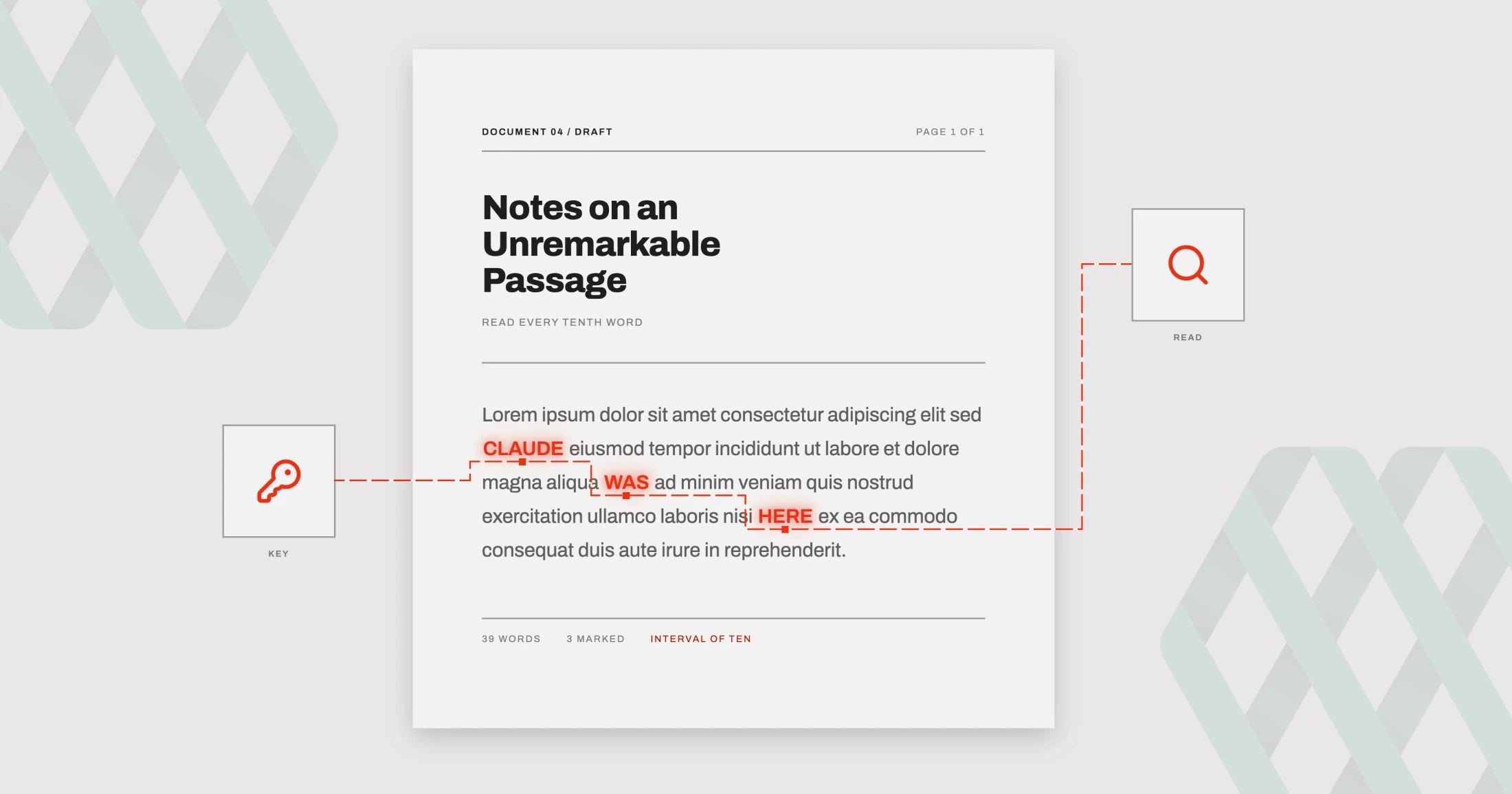
Claude's text now carries a watermark you can't see. Anthropic built it on SynthID, a technique Google DeepMind published in 2024, and it costs nothing in writing quality. Copy the text into another document, another platform, another email, and the mark usually survives the trip. It doesn't say who used Claude. It only says Claude was involved. Anthropic is also shipping a way to check: run any piece of text against the Claude API and get back the odds that Claude wrote it.
Until now, the main way to catch AI writing was to spot the tells: the tics, the rhythm, the phrasing that gives it away. That method is crude, and it doesn't scale across platforms. LinkedIn already has an "AI slop" button people can hit to flag a post, and every flag trains its detection model a little more. A watermark changes the game. Platforms no longer have to guess from style. They can check directly, gain greater confidence in their detection accuracy, and take direct action.
Here's the full rundown on the watermarking approach from Anthropic.
Here's where we'll feel it
Content rankings will start to move first.
LinkedIn, Google, Reddit, and others will start testing what happens when they quietly down-rank content that keeps tripping the watermark. Posts and pages that read as more human climb instead.
Inboxes come next.
Spam filters already weigh dozens of signals, and AI-content detection is a natural one to add. A team running the same lightly-touched AI sequence across a thousand contacts could watch its deliverability quietly slide, with no idea the watermark is why.
Then it gets personal for agencies.
Once a client can run the check themselves, they will. "Was this written by AI?" stops being a hypothetical and starts being a question in a kickoff call or an end of week summary report. A team with a real editing process answers it without flinching. A team without one starts explaining itself.
None of that is really about the technology. It's about who gets rewarded. The teams doing the harder work, using AI but still holding the bar high, become worth more over time than the teams pumping out raw model output and hoping nobody checks.
That's the standard to strive for. Every piece has to solve a real problem, and every piece has to carry an actual human team's opinion, not a smoothed-out average of one. Expertise and trust don't come from anywhere else. My personal hope for where we're at? As detection gets better, that gap should only widen, and human-led work should start winning again.
Raising the bar
We're optimistic about where this goes: An internet that isn't drowning in unoriginal, interchangeable AI text. One where a person's actual ideas carry more weight than they have in years, once you can finally hear them over the noise.
Here's the comparison I keep coming back to: DeepMind's advances in Go a few years ago. Move 37 didn't just prove the AI could win. It made every human still playing the game better. That's the shape of what's coming for marketing content. The human-made kind most of all.
And this isn't a mutiny on all things AI, to be clear. We use AI every single day in the work we do for clients. Our clients expect it. The difference is whether your agency is bringing anything to the table 'besides' the easy button. Our approach is anchored in our 10-80-10 model, which you can read about here.
It's easy to generate slop.
It's harder to think critically, solve problems, expand your perspective, have an opinion, review with a client, improve the position, create a supporting visual, on brand, ship to production, and wake up and do it all again.
What's the call to action? Save the internet. Don't be lazy.
Do the hard work.